

How Cut-Resistant Gloves Protect Workers from Injuries
Introduction
Workplace hand injuries are among the most common accidents across industries such as manufacturing, construction, warehousing, metal fabrication, glass handling, and automotive production. Sharp tools, rough materials, metal edges, and machinery can expose workers to serious cuts, lacerations, and puncture wounds. To reduce these risks, employers increasingly rely on cut-resistant gloves as an essential part of personal protective equipment (PPE).
Cut-resistant gloves provide a protective barrier between workers’ hands and hazardous materials, helping to prevent injuries while maintaining comfort and productivity.
What Are Cut-Resistant Gloves?
Cut-resistant gloves are specially designed safety gloves made from high-performance materials that resist cuts from sharp objects. Unlike regular work gloves, they are engineered to provide enhanced protection without limiting dexterity or grip.
Common materials used in cut-resistant gloves include:
- High-Performance Polyethylene (HPPE)
- Kevlar® fibers
- Steel or fiberglass reinforcement
- Polyurethane (PU) coatings
- Nitrile coatings
These materials work together to absorb and distribute the force of sharp edges, reducing the likelihood of cuts and injuries.
How Cut-Resistant Gloves Prevent Workplace Injuries
1. Protection Against Sharp Objects
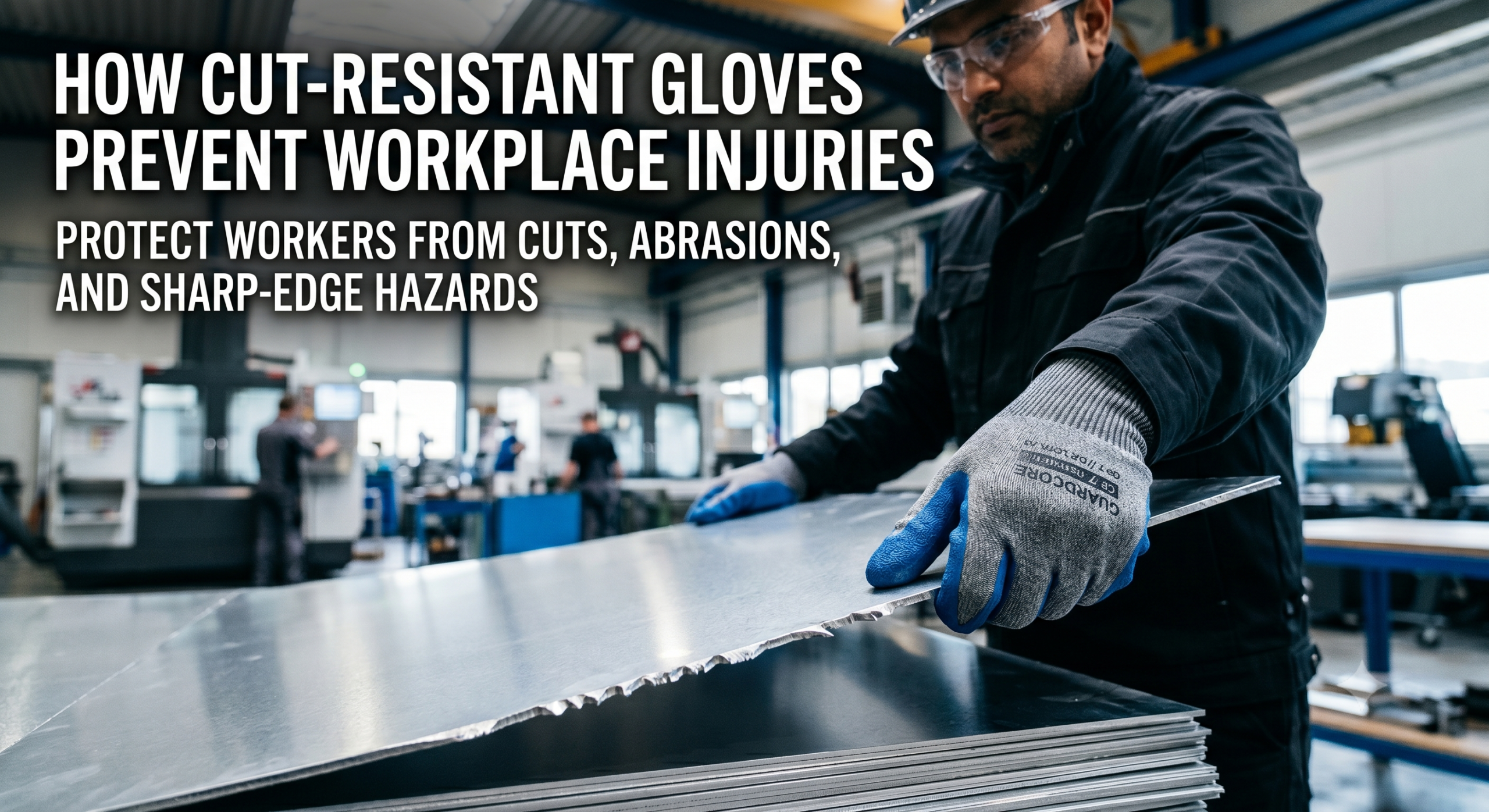
Workers often handle knives, sheet metal, glass, wires, and cutting tools. Cut-resistant gloves help shield hands from accidental contact with sharp surfaces, minimizing the risk of deep cuts and lacerations.
2. Improved Grip and Control
Many cut-resistant gloves feature textured coatings that improve grip in dry, oily, or wet environments. Better grip reduces the chance of dropping tools or materials, helping prevent accidents.
3. Reduced Severity of Injuries
While no glove is completely cut-proof, cut-resistant gloves significantly reduce the severity of hand injuries. Even if contact occurs, the glove material can lessen the impact and help prevent serious wounds.
4. Enhanced Worker Confidence
Employees who feel protected are more confident when handling hazardous materials. This confidence can improve focus, efficiency, and overall workplace performance.
5. Compliance with Workplace Safety Standards
Using appropriate hand protection helps businesses meet occupational safety requirements and demonstrates a commitment to employee well-being.
Industries That Benefit from Cut-Resistant Gloves
Cut-resistant gloves are widely used in:
Manufacturing
Protection from machinery parts, metal components, and sharp tools.
Construction
Safety while handling metal sheets, glass panels, and construction materials.
Warehousing and Logistics
Protection during packaging, pallet handling, and material movement.
Automotive Industry
Defense against sharp automotive parts and assembly-line hazards.
Glass and Metal Fabrication
Reduced risk of cuts from sharp edges and broken materials.
Choosing the Right Cut-Resistant Gloves
When selecting cut-resistant gloves, consider:
- Required cut protection level
- Comfort and fit
- Grip requirements
- Coating type (PU, nitrile, latex)
- Workplace hazards and tasks
Selecting the right glove ensures workers receive the necessary protection without sacrificing performance.
Benefits for Employers
Investing in cut-resistant gloves offers several advantages:
- Fewer workplace injuries
- Reduced medical expenses
- Lower downtime and absenteeism
- Increased productivity
- Improved employee morale
- Better safety compliance
A proactive approach to hand protection can lead to significant long-term savings and a safer work environment.
Conclusion
Hand injuries can have serious consequences for both workers and employers. Cut-resistant gloves play a vital role in preventing cuts, reducing injury severity, and improving workplace safety. By providing reliable protection, enhanced grip, and increased confidence, these gloves help workers perform their tasks safely and efficiently.
For industries where sharp objects and cutting hazards are present, investing in high-quality cut-resistant gloves is not just a safety measure—it’s a smart business decision